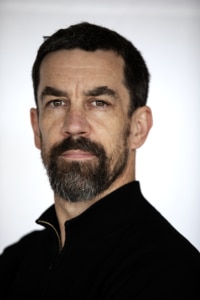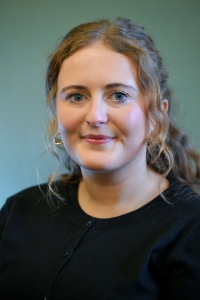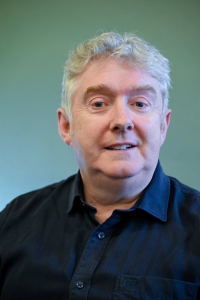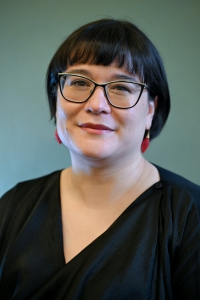
Rehearsed readings of a new site-specific play by Colin Murphy, exploring the rich and varied history of No.11 Parnell Square.
Fishamble and Poetry Ireland, although working in different art forms, are committed to collaborating with artists, sharing stories, and engaging with the community in Dublin 1, where we are both based, just around the corner from each other. Fishamble is delighted to be collaborating for the first time with our friends at Poetry Ireland, on a piece of new theatre which investigates the fascinating history of number 11 Parnell Square.
No. 11 Parnell Square East is a building haunted by politics and poetry – and not all
these ghosts see eye to eye. Join us for a piece of paranormal theatre celebrating
the history of this remarkable building.
The iconic Georgian building holds over 300 years of history, from its genteel
beginnings to periods of political unrest and shifting urban life. It has at times been
home to aristocrats, landed gentry, politicians, servants, art collectors, merchants,
writers, and local government amongst many others…
AUTHOR’S NOTE ON THE ACTUAL HISTORY
Ireland Hero History is riddled with anachronism and makes no claim to historical accuracy. However the following were the points of historical or factual inspiration.
The expert stonemason who did the pointing on No 11 – and (demanding even greater patience) explained to me what pointing is – is Jason Smith, of Artisan Conservation.
After the split in the Irish Parliamentary Party, the Dublin Parnell Leadership Committee based itself at the National Club, which occupied Number 11 from 1887 to 1900. FSL Lyons describes Parnell’s quasi-triumphant return to the National Club after his loss in the Kilkenny bye-election, in December 1890. The incendiary heckle referring to a “mistress” was spoken by Tim Healy during the famous debate at which the party had split, in Committee Room 15 in Westminster. I have placed Katherine O’Shea on the scene, drawing on her correspondence with Parnell, which Lyons quotes.
Eavan Boland’s poem, Unheroic, gives us the title, Ireland Hero History.
Her renowned workshops were recalled for me by Liz McManus and Ivy Bannister. The character’s words here are closely based on Boland’s superb memoir, Object Lessons, and on A Poet’s Dublin. Rachael Hegarty and Ruth Hegarty (not related!) also shared memories of her.
In 1897, Maud Gonne used a magic lantern to project images of contemporary poverty and evictions in the windows of No 11, to protest Queen Victoria’s Diamond Jubilee celebrations and visit to Dublin. In 1903, Victoria’s successor, Edward VII, visited Dublin. At that point, Gonne and Yeats were deeply involved in setting up a national theatre, and had a shared commitment to astrology and the occult, but Gonne had become engaged to John McBride. Though the National Club was no longer at Number 11 by then, I have combined these to imagine this 1903 meeting.
After its period as the National Club, Number 11 was taken over by Dublin County Council. George Redmond started his career in Dublin Corporation and rose to become assistant manager for Dublin city and county. I took inspiration from this to imagine Redmond haunting Number 11, with the council chamber standing in for the chamber of the planning tribunal, at Dublin Castle. Some of Redmond’s responses, here, are based on his responses as recorded in tribunal transcripts. Mick Clifford shared his memories of Redmond at the tribunal, and Douglas Hyde shared his memories of the Council.
In 1985, Seamus Heaney agreed to write a poem for the Irish section of Amnesty Ireland, following a request from Mary Lawlor. (She would go on to found Front Line Defenders.) He later described the writer’s block that ensued in an article for the Irish Times. Separately, Heaney wrote about his 1979 encounter with Danny Morrison on the Dublin-Belfast train in his poem The Flight Path, and discussed it with Dennis O’Driscoll in his interviews for the book Stepping Stones. Morrison replied in a post on his own website.
I also took inspiration from Theo Dorgan’s 2025 radio essay for Sunday Miscellany, Heritage Now, and from Barry Lennon’s illuminating tours of Number 11.
Thanks:
Ivy Bannister, Mick Clifford, Kate Cregan, Sarah Halpin, Barry Lennon and the team at Poetry Ireland, Evie McGuinness and the team at Fishamble, Catherine, Chris and Mick Heaney, Ruth Hegarty, Patricia & Douglas Hyde, Liz McManus. Jason Smith, Artisan Conservation
About the Production
Running Time
45 minutesAge Guidance
14+Cast
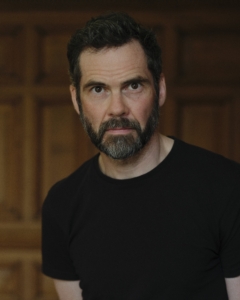
Marty Rea
Theatre credits include: A Moon for the Misbegotten, The Shaughraun, Macbeth, Riders to the Sea, Three Short Comedies, The House, DruidO’Casey, The Colleen Bawn, Be Infants in Evil, Brigit, DruidShakespeare, Waiting for Godot, The Beauty Queen of Leenane, King of the Castle, Richard III, Epiphany, The Beacon, The Cherry Orchard, DruidMurphy, Druid Gregory, The Seagull (Druid Theatre Company); Circle Mirror Transformation, Arcadia, Salomé, Hay Fever, Little Women, My Cousin Rachel, An Ideal Husband, The Caretaker, The Importance of Being Earnest, Juno and the Paycock, The Great Gatsby, Beginning, The Glass Menagerie (Gate Theatre); The Weir, Translations, Portia Coughlan, The Importance of Being Earnest, Saved, The Big House, Only An Apple, The Rivals, John Gabriel Borkman, Major Barbara, The Hanging Gardens, She Stoops To Conquer, Othello, Richard III, Thirst (and other bits of Flann), Dear Ireland (an unreliable ex-lover suddenly writes), 14 Voices From the Bloodied Field (Abbey Theatre); Hamlet (Second Age); The Dead (ANÚ/Landmark); Playboy of the Western World (National Theatre, London); 4.48 Psychosis (Once Off Productions).
Screen credits include: Strays (Arcade Film); Prisoners of the Moon (Bandit Films); Citizen Lane;
Barbarians Rising! (October Films); The Devils Pool (Vico Films); The Man Inside (Broken Pictures
Ltd.
Awards: Irish Times Theatre Awards, Best Actor (Hamlet), Best Actor (DruidShakespeare), Best
Supporting Actor (King of the Castle and The Great Gatsby); Herald Angel Award, Edinburgh
Festival (Waiting for Godot).
Productions
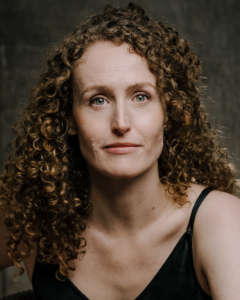

Michael Glenn Murphy
Michael was most recently seen on stage in a site-specific piece from ANU, CYCLONE, directed by Louise Lowe for the Dublin Theatre Festival.
His other most recent credits include the one-man-show, THE HOMECOMING OF JOSEPH GRACE, directed by Louise Lowe for Once Off Productions, THE PLOUGH AND THE STARS, directed by Tom Creed at The Abbey, KING LEAR at The Gate, directed by Roxana Silbert opposite Conleth Hill; and THE DEAD, from Landmark Productions and ANU, at the Museum of Literature in Dublin, directed by Louise Lowe.
Recent on-screen work includes the roles of Don Randy in BRASSIC for Sky One, and Old Gerry in BODKIN for Netflix. He also recently appeared in THE RELUCTANT ROYAL, a film directed by Kevin Fair for Hallmark.
Other on-screen credits include: HARRY WILD (Acorn TV), FINKY (CINE4), THE ALIENIST (TNT / Paramount Television), ACCEPTABLE RISK (RTÉ / Acorn TV), AN KLONDIKE (Abu productions TG4), SWANSONG (Florin Films), THE BILL (Thames TV), TAGGART (SMG Productions), LIKE FATHER
Theatre credits include: MASK MONOLOGUES (Glass Mask Theatre), STAGING THE TREATY (ANU / The National Concert Hall), OUR LITTLE WORLD (Exit Pursued by a Bear Productions / Mud Island Community Gardens), BOOK OF NAMES (ANU / Landmark), STANZA OF THE GREAT HUNGER (IMMA), THE LEAP (Fishamble / The Ark), THE ANVIL (ANU / Manchester International Festival), HAUGHEY/GREGORY (Fishamble), the VOD stream of INSIDE THE GPO (Fishamble), LOC (ANU / The Abbey Theatre), JUDGING SHAW (ANU), FUTUREPROOF (The Everyman). MONSTER (Theatre Upstairs), THE ILIAD (Conall Morrison), HAMLET (Second Age), THE AULD FELLA (Dublin Fringe Festival/ Show in a Bag), FAITH (Guna Nua), DRUID MURPHY (Druid), ROMEO AND JULIET (Second Age), BOOKWORMS (Abbey Theatre), MACBETH (Second Age), THE GOVERNMENT INSPECTOR (Abbey Theatre), ARRAGH NA POGUE (Abbey Theatre), END OF THE ROAD (Fishamble), SLATTERY’S SAGO SAGA (Performance Corporation), THE COLLEEN BAWN (Bedrock / Project Theatre), THE WALWORTH FARCE (Druid), THE LAST DAYS OF JUDAS ISCARIOT (Making Strange Theatre Company), SHINING CITY (Rapture Theatre Company), THE FLAGS (Hull Truck Theatre), MOLLY SWEENEY (Scottish National Theatre), and SHADOW OF A GUNMAN (Glasgow Citizens Theatre).
Productions

Patrick Martins
Patrick is a graduate of The Lir. He was selected as SCREEN DAILY’S RISING STAR for Ireland in 2023.
Patrick played series reg ‘Sonny’, opposite Paddy Considine and Christina Hendrix, in Chris O’Dowd’s Sky Comedy Drama series Small Town Big Story. Other recent TV includes: Cooper & Fry for Channel 5; Harry Wild for Acorn; Northern Lights for Lionsgate/Deadpan Pictures; Redemption for ITV and The Confessions of Frannie Langton on Britbox/ITV.
In film, Patrick starred opposite Imogen Poots in Joe Lawlor and Christine Malloy’s feature Baltimore which showcased at BFI Film Festival. He will soon appear in Chris Cottam’s upcoming feature The Problem With People opposite Paul Reiser as well as featuring in Ancestors, directed by David Turpin.
Patrick is currently appearing in Golden Boy at the Almeida Theatre opposite Josh O’Connor. He previously made his London Theatre debut in Wedding Band, directed by Monique Touko at the Lyric Hammersmith Theatre.
In Ireland, Patrick received rave reviews for his role in An Octoroon at the Abbey Theatre. Further theatre includes: Emma & Audrey or Sorrow for The Abbey Theatre; Revolutionary for the Stavanger Theatre, Norway; The Wake & The Great Hunger for The Abbey; Gilgamesh for Macnas, and Rough Magic’s Much Ado About Nothing.
Productions
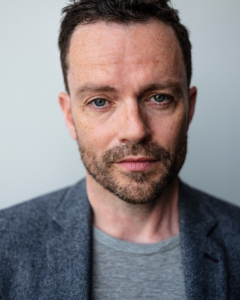
Patrick Moy
Patrick trained at RADA and has worked with companies including the Abbey Theatre, RSC, Shakespeare’s Globe, Lyric Theatre Belfast and in the West End. Roles in recent years have included Truman Capote in Andrew O’Hagan’s one-man show ‘The Ballad of Truman Capote’, Michael Collins in Fishamble’s ‘The Treaty’ by Colin Murphy, Stanislaus Joyce in Edna O’Brien’s last play ‘Joyce’s Women’ at the Abbey. He was nominated for the Ian Charleson Award and Best Performer at Dublin Fringe Festival. He has narrated over 30 audiobooks. He has been highly commended in the Bridport Short Story Prize, shortlisted for the Bridport Poetry Prize, and longlisted for the Bristol Short Story Prize. He is currently writing a one-man play.
Productions
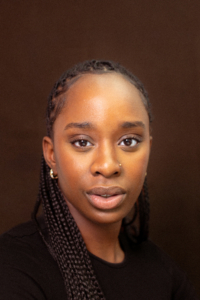
Tishé Fatunbi
Tishé has most recently been cast as Abi in MEREDITH, a
new play by Erica Murray, directed by Annabele Comyn for the
Gate Theatre, Dublin.
Tishé most recently performed DEAR ROSA by Joy Nesbitt at
the Barbican London, for Landmark Productions; she also
played Young Felicia in OCTOPUS CHILDREN for
ThisIsPopBaby, and Eunice is A STREETCAR NAMED
DESIRE directed by Cathal Cleary for Once Off Productions &
Smock Alley Main Stage.
Screen roles include the part of Cassandra in the the
single-hander short YOU IN THE MIRROR, directed by Esosa
Ighodaro; the role of Ife in the short film THE KNIFE, directed
by Joy Nesbitt for Keeper Pictures; and the role of Temi in the
Screen Ireland funded short DANCE LIKE SOMEONE IS
WATCHING, directed by Esosa Ighodaro, which premiered at
the Galway Film Fleadh 2025.
Tishé performed her own show OLOLUFE at the Dublin Fringe
Festival 2024, for which she was nominated for best performer
at the Dublin Fringe Festival Awards.
Just prior she played the role of The Writer in LISTEN, A
BLACK WOMAN IS SPEAKING, directed by Joy Nesbitt; and
the role of Red in WE DANCE, directed by Praise Titues, for
which she was awarded Best Performer at the 2022 Irish
Student Drama Awards. Tishé was recently awarded the Black
and Irish award for Actor of the Year 2023 for her work on WE
DANCE.
Tishé played Saint Joan in a 2022 amalgamation of the work
of George Bernard Shaw titled GBS which was shot in the
National Gallery of Ireland, directed by Kellie Hughes. Tishé
played the lead role in RE:JOYCE a 2022 short film imagining
the life of a young modern, gender-bent James Joyce at UCD.
Tishé is a Dublin-based actor, writer, and theatre maker as
well as a co-founder of a newly launched black-run theatre
company named Arinola Theatre.